May 1, 2026
The Important Role of Load Monitoring in Subsea Applications
In subsea and offshore operations, understanding how your equipment is performing is essential. Load monitoring helps operators see how their assets respond to changing weather and sea conditions, providing the insight needed to make informed operational decisions.
Whether monitoring tension in mooring chains, measuring forces on floating platforms, or tracking subsea equipment during routine operations, recorded load data allows operators to evaluate performance under real-world conditions. These insights support more effective planning, stronger risk management, and help ensure compliance with safety and regulatory requirements.
Challenges Historically Faced with Subsea Load Monitoring
Despite its importance, operators working in subsea environments have often faced difficulty capturing accurate, long-term datasets, due to the constraints of existing load monitoring equipment. Limitations in logging speed, data storage capacity, and positional measurement capabilities have historically restricted access to meaningful datasets, limiting operators’ ability to analyse performance post-application and make informed operational decisions when planning future operations.
Solution: DLM’s Subsea Data Logger
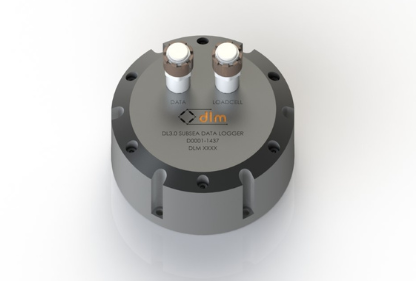
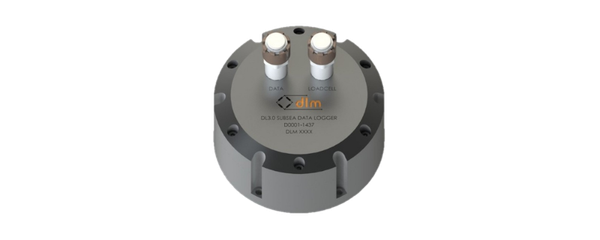
To address these limitations, our in-house design team developed the Subsea Data Logger DL-3.0. This advanced subsea data logging solution features a self-powered PCB data logger, which is housed within a compact stainless steel enclosure. The data logger is connected directly to a DLM Load Cell which collects the data.
Consisting of multiple onboard sensors and equipped with extra capacity for external mV or mA inputs, the DL-3.0 can sample onboard and external sensors at customisable sample rates of up to 800Hz.
How does the Subsea Data Logger work?
Housed within a compact stainless steel 316 enclosure with mounting holes, the Subsea Data Logger allows for straightforward integration into existing or new subsea equipment. The Subsea Data Logger is connected to a subsea load cell via a wire. When in application the Subsea Data Logger reads the analogue input signal from the strain gauges of the load cell it is connected to and it converts the analogue signal into a load reading, which is readable on a PC. The data collected is stored on an internal memory card, and can be downloaded through connecting the data logger to a PC via a USB cable, after being recovered post-application.
Where the Subsea Data Logger can be disconnected from the load cell post-application, users can retrieve their data without removing the load cell itself. This is particularly beneficial when the data logger is used in conjunction with a load cell that is built into a subsea vehicle or structure, as it enables end users to access their data without altering the installed load cell.
Additional onboard sensors, including a gyro accelerometer and on-board status logging are also integrated within the data logger. Data from these sensors can be extracted using the same process.
The Subsea Data Logger provides end-users with:
- Fast data capture: With a fast sample rate, which is user configurable up to 800 samples per second, operators are able to spot peak loads and fast transients.
- Large Storage Capacity: The Data Logger comes supplied with an internal 16Gb SD card for storing a high volume of logged data, which can be collected over prolonged periods of time.
- Rate of Change and Positional Data: With Gyro sensors integrated, end users are able to record positional and rate-of-change data, giving a clear, time-aligned picture of load behaviour under operational conditions.
- Ease of Data Access: The Subsea Data Logger provides end-users with the ability to easily transfer and access large volumes of data via a USB and downloadable CSV files.
By combining fast data logging, a large storage capacity, and advanced positional tracking capabilities, with a compact, durable design, the DL-3.0 directly addresses the key constraints that have historically restricted attempts to capture meaningful load datasets in subsea operations.
Operational Benefits of the Subsea Data Logger DL-3.0
Protect Essential Subsea Equipment
The Subsea Data Logger gives end-users access to information that can help them protect their critical subsea assets. Reviewing accurate, recorded load data from real operating conditions, enables the users to develop a deeper understanding of how equipment behaves in application. The operators are able to use these insights to plan future deployments and strengthen operational safety.
The Subsea Data Logger’s sample rate, configurable up to 800 samples per second, supports operators in identifying peak loads and sudden unexpected changes in stress and tension that occurred during application, that could contribute to damage or overload. With this insight, operators can ensure that equipment isn’t exposed to conditions and tension that could contribute to fatigue, premature wear or significant damage in future projects.
Avoid Unscheduled Downtime
Reducing the likelihood of equipment damage lowers the risk of unscheduled downtime disrupting offshore operations, as projects won’t need to be paused to replace and repair key assets. In offshore operations, where even short delays can have significant financial and operational impacts, maintaining uninterrupted operations is essential for operators.
Meet Legal Requirements and Adhere to Strict Compliance Rules
Operators are frequently required to demonstrate that equipment has been used within safe working load limits and that structural components have not been exposed to conditions beyond what they can safely handle.
The Subsea Data Logger supports this requirement by providing accurate, time-stamped load data that can be stored and exported in a downloadable CSV format. The internal 16 Gb SD card enables the collection of high-volume datasets over extended periods of time, ensuring operators can maintain detailed records for audits and inspections.
Through having a clear, time-aligned picture of load behaviour under operational conditions, end-users can demonstrate their compliance.
Improved Operational Efficiency Moving Forward
By utilising data to assess how structural loads vary during changing sea states and adverse weather conditions, operators are able to build an evidence-based understanding of platform behaviour and exposure, giving them the information required to make well-informed operational decisions. These decisions can help make processes more seamless and save time throughout project timelines.
Proven Impact in Real-world Applications
Since its launch, the Subsea Data Logger DL-3.0 has been utilsed by various DLM customers, for a range of subsea and offshore operations, providing our customers with actionable data insights into load behaviour in real-world applications. Key examples of this include:
Assessing forces on Floating Platforms
In seaweed farming operations, the data logger was supplied to our client as a solution for measuring forces acting on floating platforms over extended periods. This enabled the end-users to assess how structural loads vary during changing sea states and adverse weather, supporting a more evidence-based understanding of platform behaviour and exposure.
Recording Logged Tension Data in Fishing Nets
The DL-3.0 has been used in the aquaculture industry by a customer who needed to log tension in fishing nets, and access data that would enable them to protect their operations and reduce the risk of operational downtime due to equipment failure. By collecting the data with the DL-3.0, the end-user was able to develop a deeper understanding of how tension was affecting the nets. This meant that unusual stress or excessive tension could be easily identified, enabling our customer to adjust their approach in future operations and protect their equipment.
Measuring Tension in a Mooring Chain of a Weather Buoy
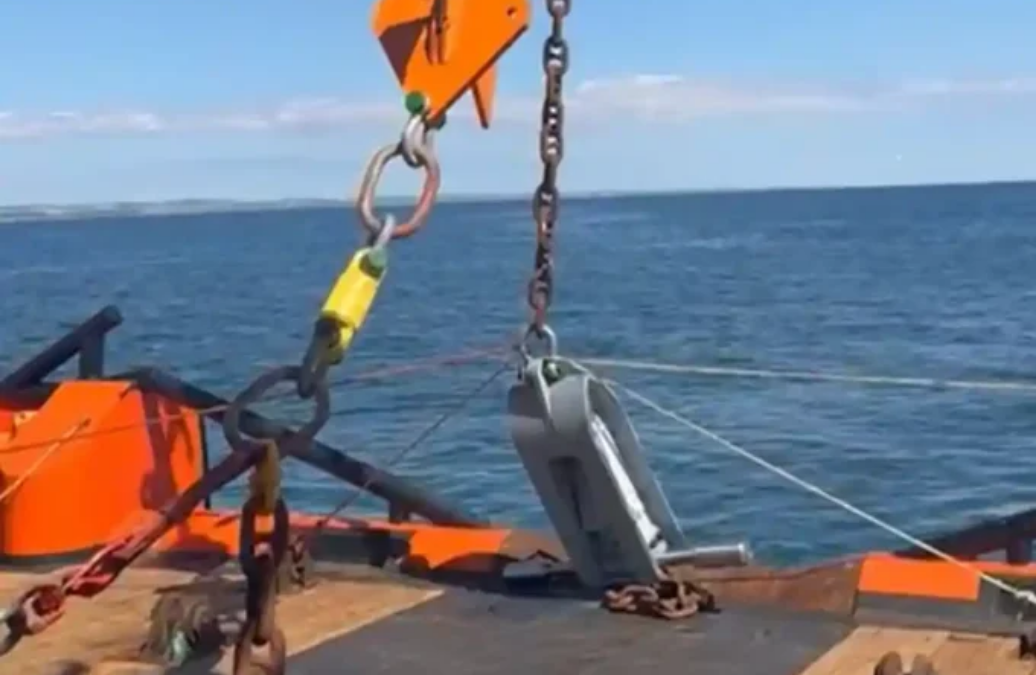
We supplied a Subsea Data Logger to our long-term customer, the National Oceanography Centre for scientific research purposes. For this application, we mounted a DLM Cell with a connected Subsea Data Logger on a mooring chain of a weather boy, enabling the NOC to measure the tension in the chain over a sustained period of time, throughout various weather conditions. The end-users design was then able to be optimised based on the data provided by the Data Logger.
Discuss Your Project Requirements
If you are reviewing a subsea or offshore project and require accurate insight into load behaviour, get in contact with our highly-experienced engineering team, who will be able to discuss your specific project requirements and help provide a load monitoring solution that supports informed, evidence-based decisions.